project
1.
Design of WCD and combustión chamber.
Project carried out for one of the main steel companies in Europe, known for its leadership in the production of long steel and for its commitment to sustainability and the circular economy.
With operations in various industries, this company has strategic facilities in Spain, where it focuses on the production of high-demand steel products.
Our collaboration in their facilities has been key to optimizing their cooling systems in smoke purification processes in high-capacity ovens.
About the scope of the project.
The scope of the project included the design, manufacturing, supervision and assembly of the water cooling systems in the plant’s furnaces , with the aim of improving the durability and efficiency of these critical systems, minimizing unscheduled stops and increasing their useful life cycle.
The project involved four main tasks , all of which involved improving the furnaces’ water cooling systems as well as the combustion chamber panels.
These tasks were carried out in a coordinated manner to ensure maximum integration and optimization of the implemented solutions , both at a technical and operational level.
Task 1. Modification of the engineering of the cooling ducts.
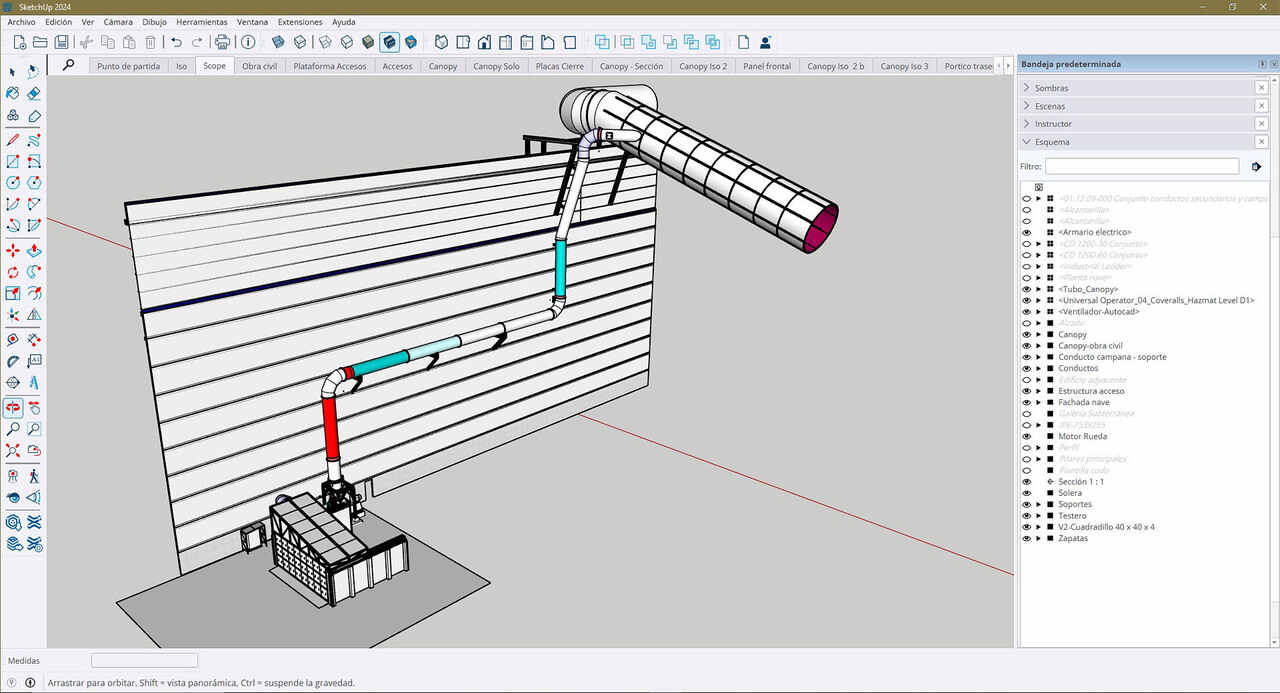
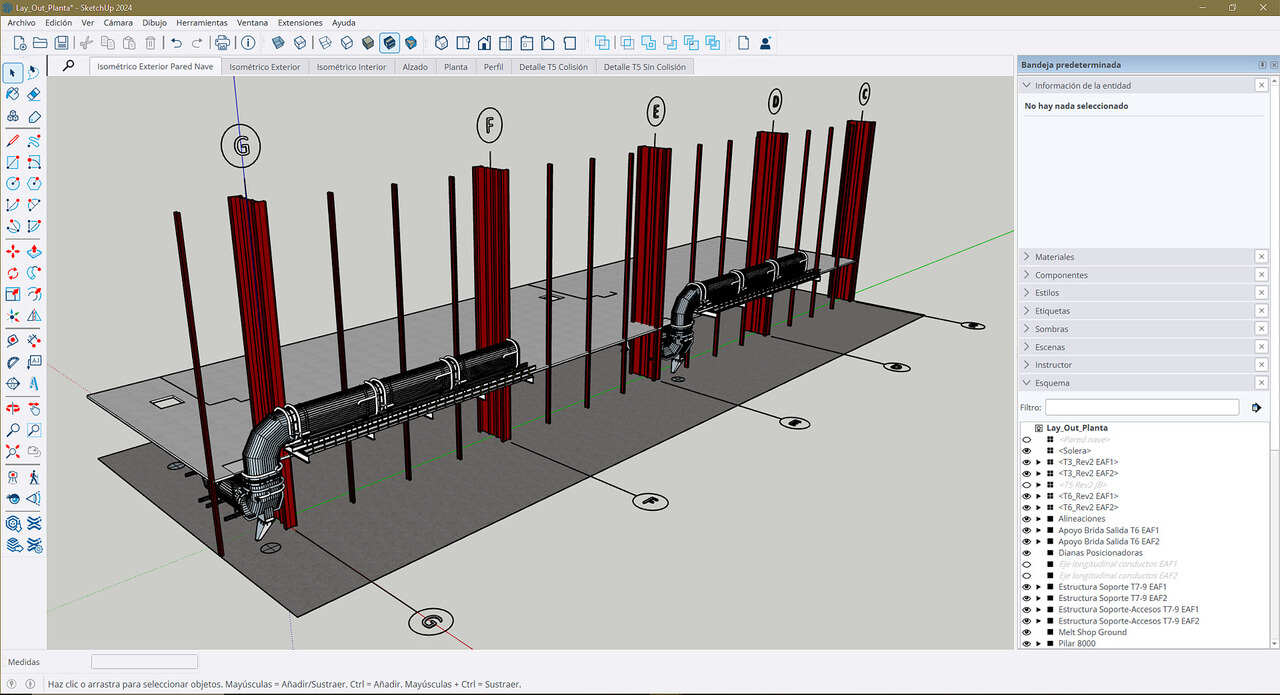
The first phase of the project involved redesigning the water cooling ducts for the flue gas cleaning system of furnaces 1 and 2. The original ducts, with a “tube-on-tube” design and diameter of 73 mm, showed corrosion problems that significantly reduced their useful life, causing leaks and loss of efficiency.
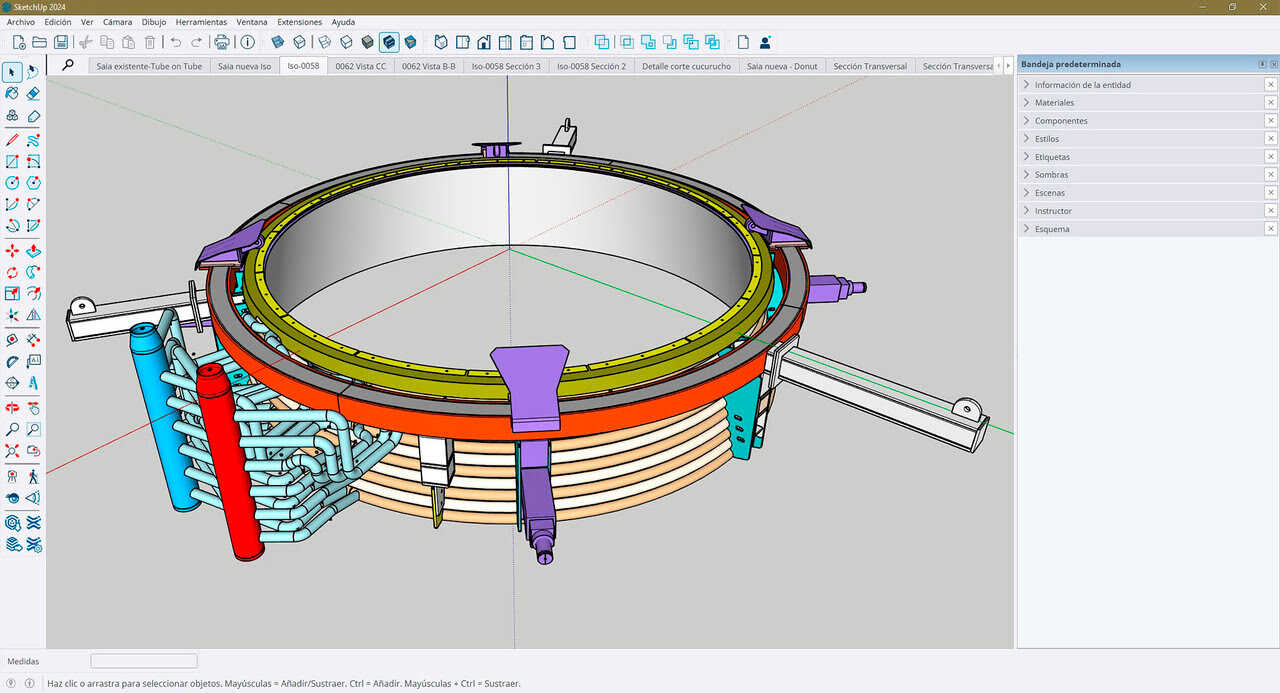
To address this situation, a new design was developed that uses a thicker duct, with welded profiles on its exterior for the flow of cooling water.
This change increased corrosion resistance, thus extending the life cycle of the pipes and reducing the need for frequent replacements.
Task 2. Identification of suppliers and management of manufacturing and assembly.
n the second phase, we are responsible for managing the identification of suppliers for the manufacture and assembly of the new ducts.
We selected three national companies with extensive experience in the manufacture of cooling ducts, ensuring that they met the required technical specifications.
In addition, we carry out exhaustive monitoring of manufacturing , guaranteeing quality and delivery times through regular visits to suppliers.
This work was essential to ensure that the ducts met quality standards and that the manufacturing process ran smoothly.
The assembly was coordinated in the same way, ensuring that the installation of the ducts was carried out within the stipulated deadlines and with the appropriate safety and quality measures.
Task 3. Supervision of the manufacture of refrigerated ducts.
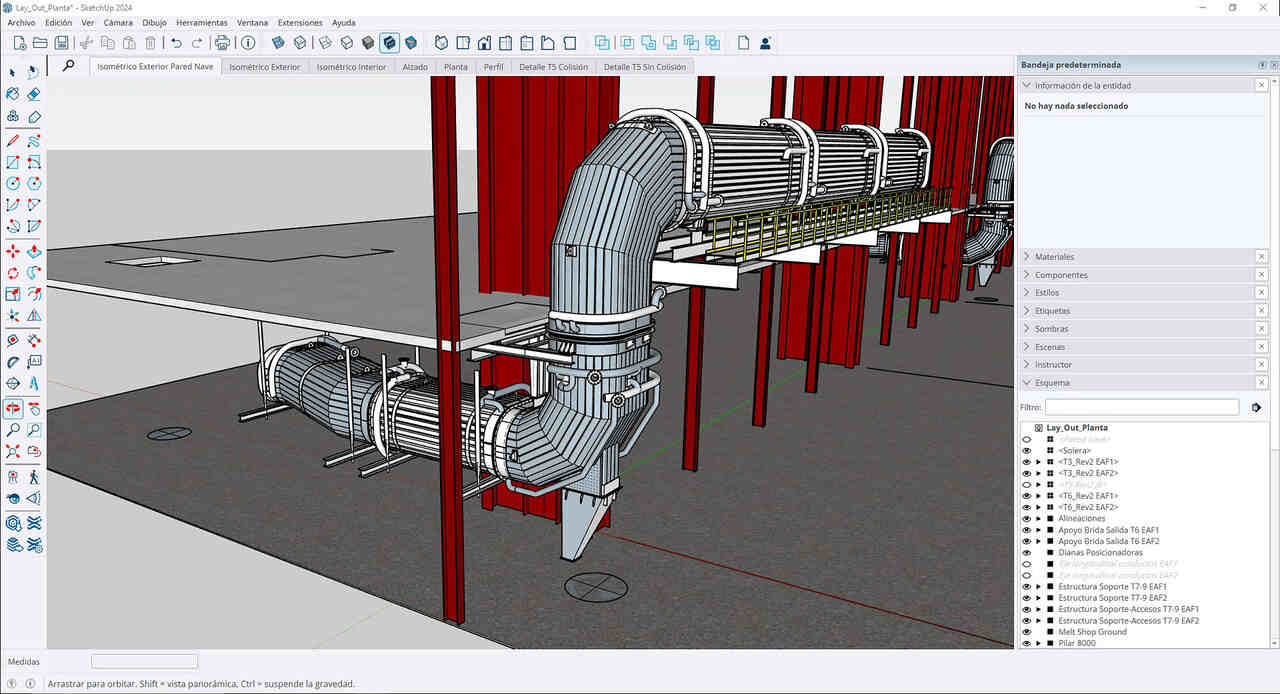
The third phase was an extension of the previous work, focusing on supervising the manufacture of the furnace cooling ducts , which required additional attention due to the geographical location of the successful bidders.
We carried out an exhaustive control of the manufacturing progress, ensuring that the welding reports and the tests for tightness, continuity and circuit marking complied with the requirements. This detailed monitoring made it possible to guarantee that the conduits delivered met the safety and operational requirements.
Task 4. Modification of the engineering of the combustion chamber cooling panels.
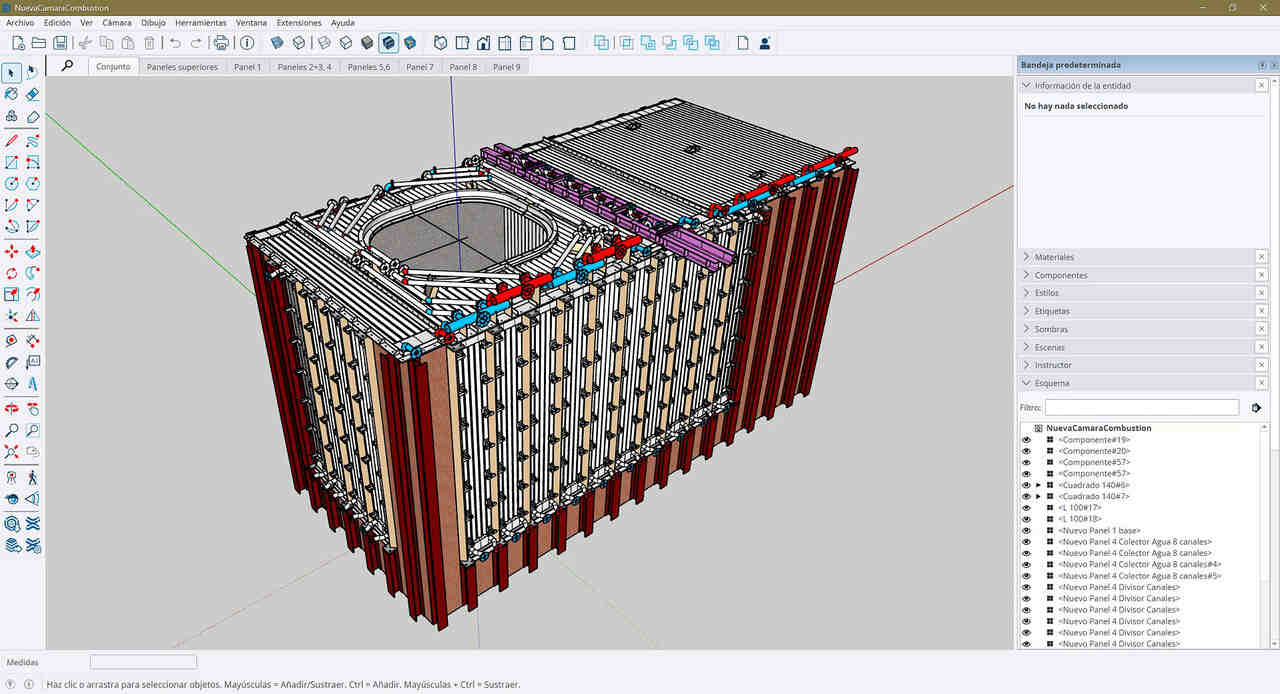
The final phase of the project involved engineering modifications to the water-cooled panels in the furnace combustion chamber .
Similar to the work done on the ducts, a design with greater wall thickness and welded profiles on the outside was proposed for the cooling water flow.
This solution significantly increased the durability of the panels, reducing wear due to corrosion and facilitating maintenance, since repairs can be carried out from inside the panels.
This change not only extended the life of the panels, but also improved the plant’s ability to make quick and effective repairs when necessary.
Conclusion.
This comprehensive project to optimise water cooling systems at a major steel plant has resulted in a significant improvement in the efficiency and durability of the smoke purification systems in the furnaces.
The redesign of the ducts and panels, together with comprehensive management of manufacturing and assembly, has allowed for increased production cycles without interruptions, reduced downtime due to failures and improved preventive maintenance capacity .
Coordination of the different phases of the project has been key to ensuring that the new systems not only respond to the current needs of the plant, but are also prepared to meet future operational and energy efficiency challenges.
This integrated and comprehensive approach has been critical to ensuring the success of the solutions implemented and maximizing long-term benefits.
Do you need help to adapt your facilities to environmental regulations?